
An S-corp election doesn’t finish your tax plan. Payroll, retirement contributions, insurance, and old IRA balances still need to work together.
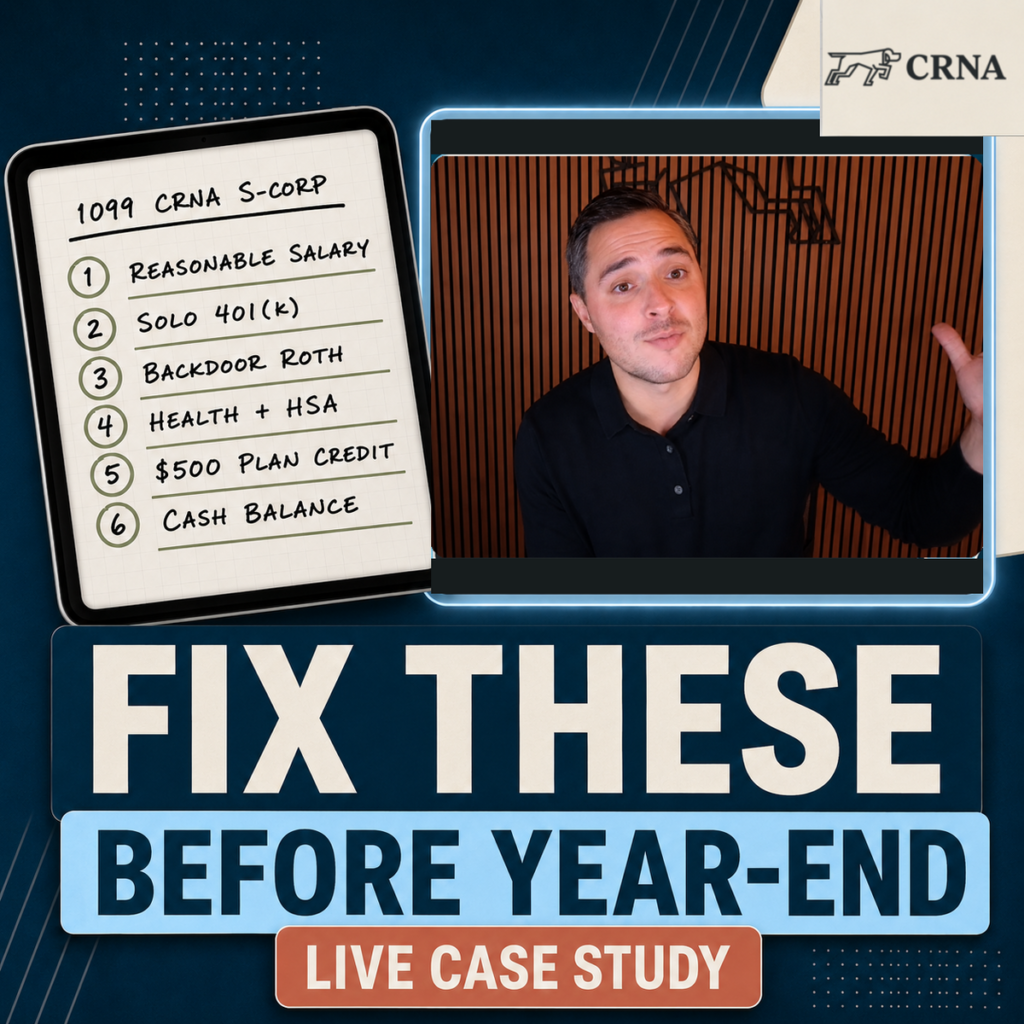
This case study looks at six places a 1099 CRNA’s setup can leave opportunities on the table. The work is to check compensation, review the Solo 401(k), sort out an old IRA, verify benefit reporting, check available credits, and decide whether a cash balance plan makes sense.
The payoff depends on your numbers and which changes you qualify for. Watch the original video for the walkthrough, or use the written checklist below, reviewed in October 2026.
The six fixes (with deeper dives)
- Review reasonable compensation. Your S-corp salary needs to reflect the work you do. Then look at payroll taxes alongside other wages and retirement goals. Reaching the Social Security wage base at another job does not remove your S-corp’s payroll obligations. Sole Proprietor vs. S-Corp for 1099 CRNAs.
- Check what your Solo 401(k) allows. Review employee deferrals, employer contributions, and voluntary after-tax contributions with Roth conversions. These are separate contribution types, and the plan must support the features you want. Coordinate limits with any workplace plan before funding. Solo 401(k) and mega-backdoor case study.
- Review the old IRA before doing a backdoor Roth. Moving eligible pre-tax IRA money into a Solo 401(k) that accepts rollovers can help manage the pro-rata issue. Check all traditional, SEP, and SIMPLE IRA balances, rollover rules, fees, and investments first. Reverse Rollover to a Solo 401(k).
- Get owner health benefits reported correctly. More-than-2% S-corp owners have special rules for health insurance and HSA contributions. Confirm eligibility, payment or reimbursement, W-2 reporting, and the personal deduction with your CPA and payroll provider. Payroll processing alone does not make a benefit tax-free. Health Insurance and HSA via Your S-Corp.
- Check credits you actually qualify for. Retirement-plan startup and auto-enrollment credits have different requirements. The startup-cost credit requires at least one eligible employee who is not highly compensated. Don’t assume every owner-only plan qualifies for every credit. Check the IRS eligibility rules.
- Run the numbers on a cash balance plan. This may create additional deductible retirement contributions when income and cash flow support the commitment. Include required funding, administration, employee coverage, and future years in the decision. An actuary needs to determine the contribution range. How defined-benefit plans work.
What to do next
Education only. Eligibility, contribution limits, and deadlines depend on your circumstances. Sources: IRS S-corp compensation and health insurance, owner HSA reporting, and multiple-employer withholding.