
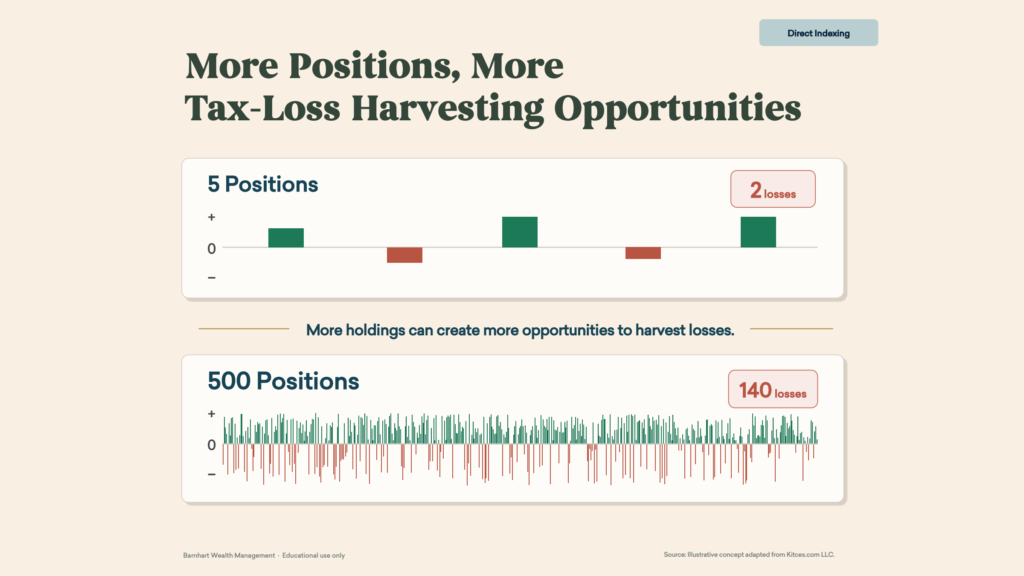
When Direct Indexing Is Worth the Complexity
More tax lots can create more choices. Whether those choices are worth paying for depends on the household.
When Direct Indexing Is Worth the Complexity Read More »
More tax lots can create more choices. Whether those choices are worth paying for depends on the household.
When Direct Indexing Is Worth the Complexity Read More »
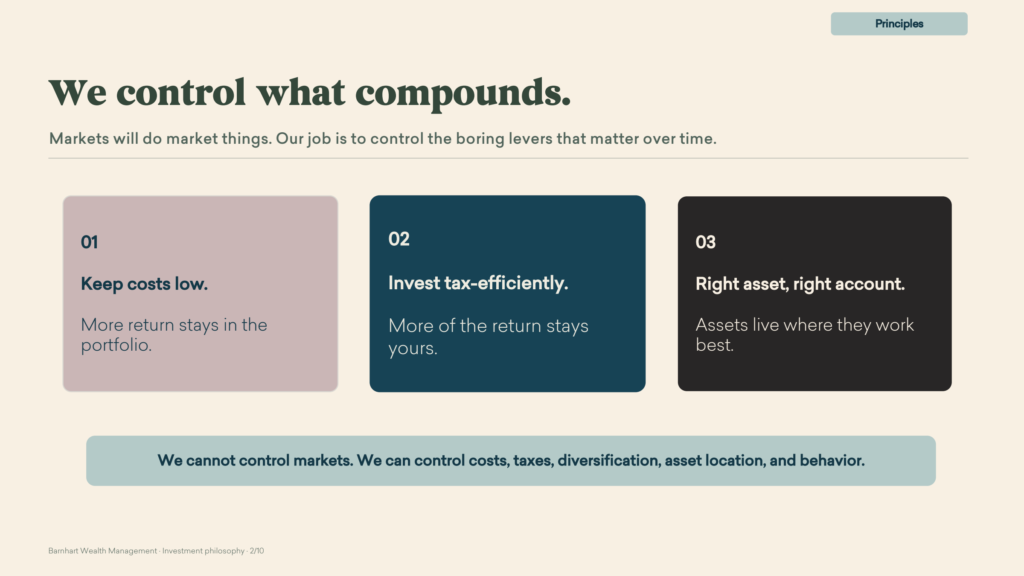
Costs, taxes, account placement and the decisions you repeat deserve more attention than the next market prediction.
What We Can Actually Control as Investors Read More »

Qualified Term converts tax-advantaged assets into years of current spending. Learn what belongs in Qt and how to balance retirement saving with liquidity.
Qualified Term for CRNAs: What Your Qt Score Means Read More »

CRNA demand is strong, but a bigger paycheck does not automatically create more freedom. Here is how to use current salary data and give your next raise a purpose.
CRNA Pay Is Rising. Is Your Financial Freedom Keeping Up? Read More »

Insurance Rate combines life, disability, and personal liability coverage ratios into one score. Learn the official formulas, calculate an estimate, and see why policy details still matter.
Insurance Rate for CRNAs: What Your Ir Score Means Read More »

Understanding the VMS is the starting point. Learn where a locum CRNA’s bargaining power comes from, how to compare real alternatives, and what to negotiate before committing.
VMS for Locum CRNAs: Understanding the System and Protecting Your Bargaining Power Read More »

Equity Rate measures how much of your investable assets, including personal cash, is allocated to equities. Calculate Er and put it in context with time horizon, risk capacity, and risk tolerance.
Equity Rate for CRNAs: What Your Er Score Means Read More »

Debt Rate shows how much gross income is committed to required debt payments. Calculate your Dr and see how payment type, liquidity, and savings change the diagnosis.
Debt Rate for CRNAs: What Your Dr Score Means Read More »

A practical 2026 guide to choosing between a 403(b) and 457(b), using both plans together, and avoiding the mistakes that matter most for CRNAs.
403(b) vs. 457(b) for CRNAs: The 2026 Guide Read More »

Your house may be one of your biggest assets, but it cannot pay the grocery bill without a sale, refinance or loan. Real Estate Term shows how many years of spending your property equity represents and whether the rest of a CRNA household’s plan has enough flexibility.
Real Estate Term for CRNAs: Is Too Much Wealth Tied Up in Property? Read More »